Skip to content
Wladimir Ming

Chapter I

Air Force & aviation

Brazilian Air Force: six years of discipline, precision and commitment.

A path that began with compulsory military service and became six years of learning, technical specialisation, responsibility and professional growth.

2014–2020 · Brazilian Air Force

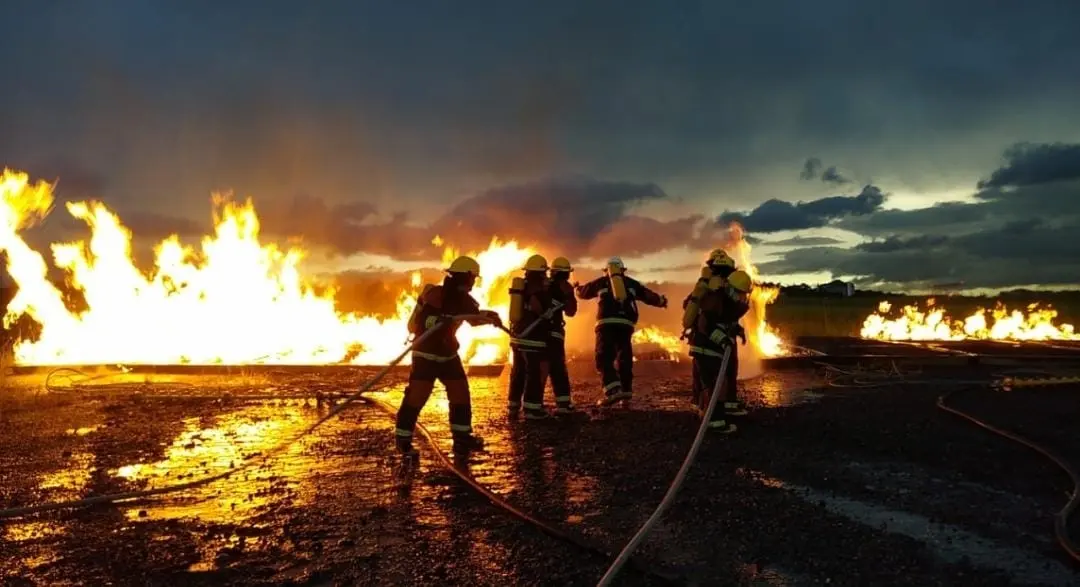
Aviation firefighters in protective gear advancing with hoses towards a large fuel fire at dusk

Timeline

  1. 2014

    Joining the Air Force

    Air Force Infantry

    Compulsory military service: infantry training, security and surveillance of installations, and jungle survival techniques.

  2. PAMASP, Campo de Marte

    São Paulo Aeronautical Materiel Park

    Staying on voluntarily and specialising as an aerodrome firefighter.

  3. BASP, Guarulhos

    São Paulo Air Base

    Aircraft emergencies, training on specialised equipment and military duties, including responsibilities linked to the training and instruction unit.

  4. Further training

    Throughout the service

    Pre-hospital care (APH), training delivered with the participation of Infraero, and administrative skills.

  5. 2020

    End of service

    Private First Class (Soldado de Primeira Classe)

    Six years without a single disciplinary sanction, recognised with an Honour of Merit (Honra ao Mérito) for exemplary conduct.

  6. Today

    Professional legacy

    Technology and digital strategy

    The principles learned in the Air Force, applied to web development, SEO and digital marketing.

My years in the Air Force

Chapter 1 · 2014

The beginning of a journey

In 2014 I joined the Brazilian Air Force to complete compulsory military service. What was meant to be a single year became the start of a six-year journey, in which I developed technical, operational and personal skills that still shape the way I work.

My training began in the Air Force Infantry: military security, surveillance of installations, infantry operations and jungle survival techniques. That first stage demanded discipline, physical preparation, mental resilience, teamwork and the ability to adapt to challenging situations.

I learned early that preparation, responsibility and attention to detail are what make it possible to carry out a task safely and efficiently. When the compulsory period ended, I chose to stay on voluntarily to keep developing professionally.
Chapter 2 · PAMASP

Specialisation and technical growth

After my first year I stayed at the São Paulo Aeronautical Materiel Park (PAMASP), at Campo de Marte in São Paulo, a military organisation specialised in the maintenance and technical support of Brazilian Air Force aircraft, including F-5 fighters.

Still part of the Air Force Infantry, I broadened my training by specialising as an aerodrome firefighter. The new role required knowledge of:

  • Aircraft fire prevention and firefighting
  • Operational safety at airport facilities
  • Emergency response
  • Rescue techniques
  • Pre-hospital care (APH)
  • Procedures for critical situations

The work called for constant preparation, technical training and coordinated action in settings where a mistake could carry significant risk. It strengthened my ability to analyse situations, follow complex procedures and work efficiently under pressure.

Chapter 3 · BASP

Aircraft emergencies in Guarulhos

I was later transferred to the São Paulo Air Base (BASP) in Guarulhos, next to São Paulo/Guarulhos International Airport. I continued to serve as an aerodrome firefighter, in safety and emergency-response activities both in the military setting and in the context of the civil airport.

Working in an airport complex of that size greatly expanded my technical and operational knowledge. At the same time I kept my military duties, including responsibilities linked to the training and instruction unit.

Specialised equipment and technology

I was trained to operate specialised aircraft rescue and firefighting equipment, including Rosenbauer vehicles. This equipment includes technology such as piercing systems, which make it possible to apply extinguishing agent inside an aircraft in certain situations.

Training covered specific operating procedures and response techniques suited to the complexity of aircraft emergencies, along with exercises for incidents at a very busy airport. Technical preparation, strict safety protocols, clear communication and teamwork were essential.

Chapter 4

Further training and new responsibilities

Over the six years of service, I kept expanding my knowledge through courses, training and experience in different areas.

Pre-hospital care (APH)

I took part in several training programmes in first aid, pre-hospital care and emergency response, including APH training delivered with the participation of Infraero, Brazil's state airport operator, which broadened my knowledge of casualty care and emergency procedures.

Military training

I also started the Air Force Police course, which I did not complete.

Administration and organisation

I also developed administrative skills: organising processes, following internal procedures and providing administrative support. It complemented my operational training and gave me a broader view of how an institution works.

By the end, my experience brought together three core areas: military operations, aviation safety and emergency response, and administration.

Chapter 5 · 2020

Honour of Merit: six years of exemplary conduct

After six years of service I completed my military career as a Private First Class (Soldado de Primeira Classe), receiving an Honour of Merit (Honra ao Mérito) for the exemplary conduct I maintained throughout, without a single disciplinary sanction.

More than the end of a chapter, it confirmed principles that are still part of my life: integrity, discipline, commitment and respect for the responsibilities I take on. I bring those values to every new challenge, whatever the field.

Chapter 6

From military service to technology

After the Air Force my career took other paths, but the principles of those six years are still present in how I work: analysing scenarios, identifying risks, learning new technologies, building solutions and executing with precision.

Today, in web development, SEO and digital marketing, I work with a mindset built from very different experiences connected by similar values: the discipline to master technical procedures, attention to detail and the ability to understand complex problems.

Understand the problem, build a strategy and execute responsibly.

Skills developed

  • Discipline and responsibility
  • Teamwork
  • Problem solving
  • Working under pressure
  • Risk analysis and management
  • Technical learning
  • Organisation and procedures
  • Adaptability
  • Operational communication
  • Attention to detail
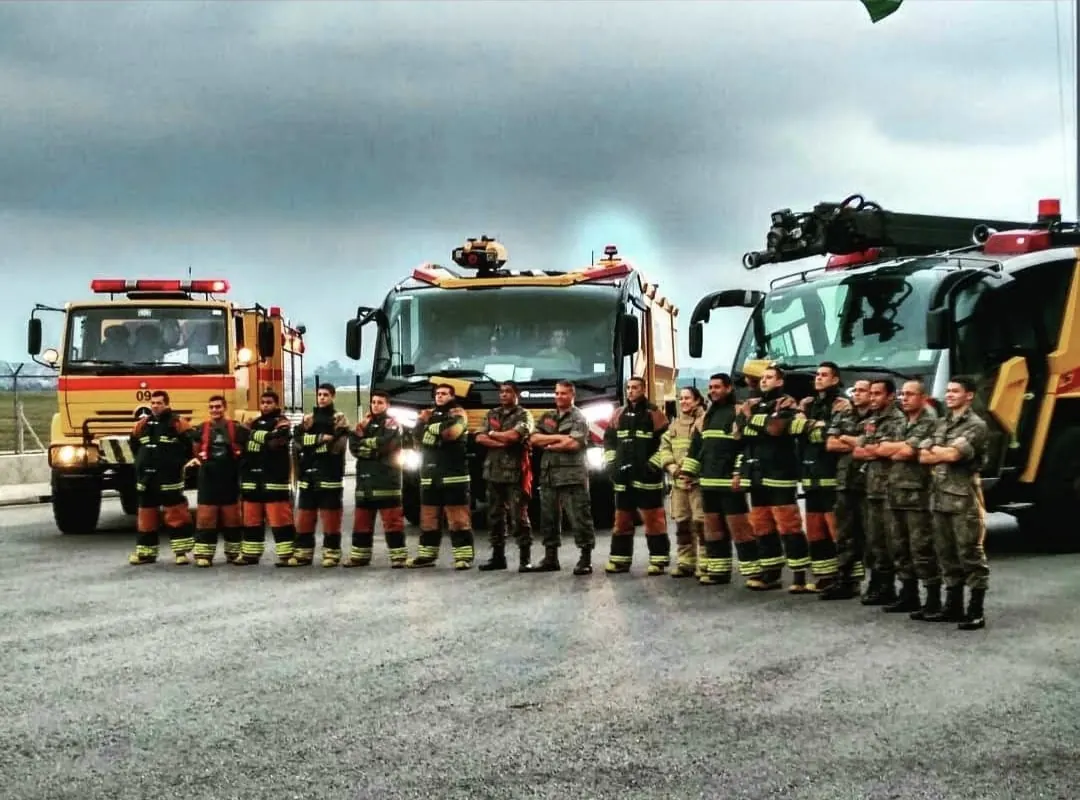
A team of aerodrome firefighters and Air Force personnel lined up in front of three airport crash tenders with their lights on
The team in front of the crash tenders.
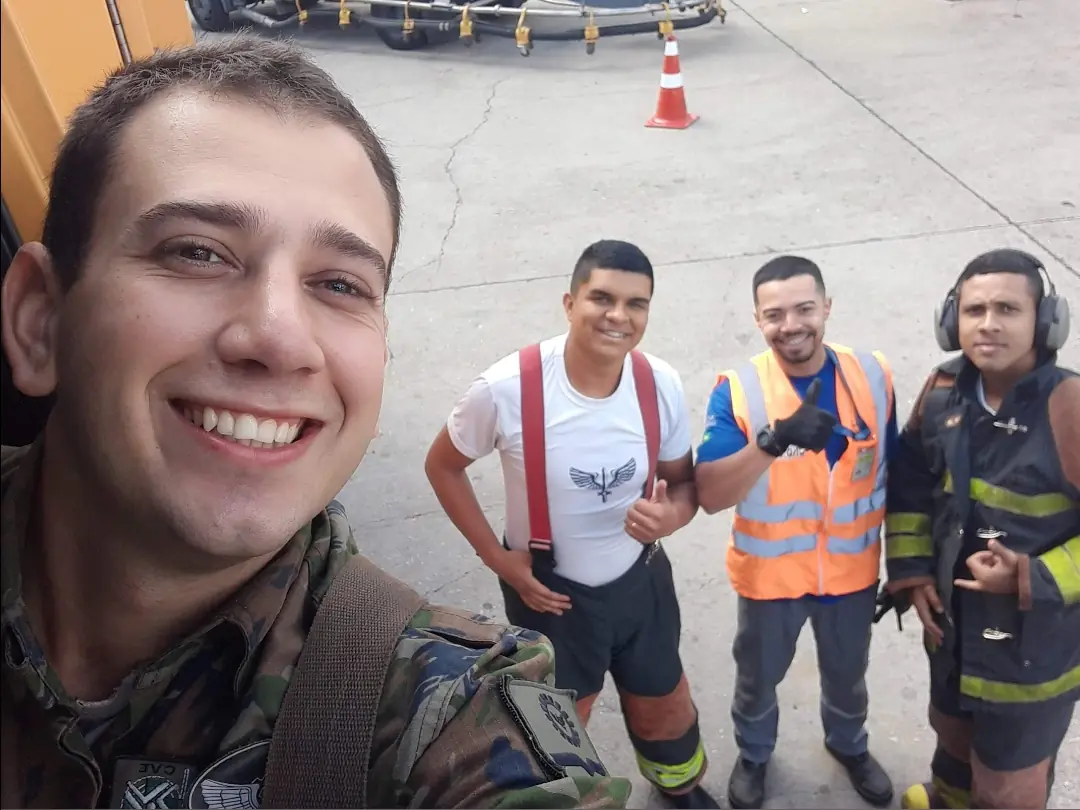
Selfie of Wladimir Ming in Air Force uniform with three colleagues on the apron behind him
With colleagues on the apron, Guarulhos (2019).
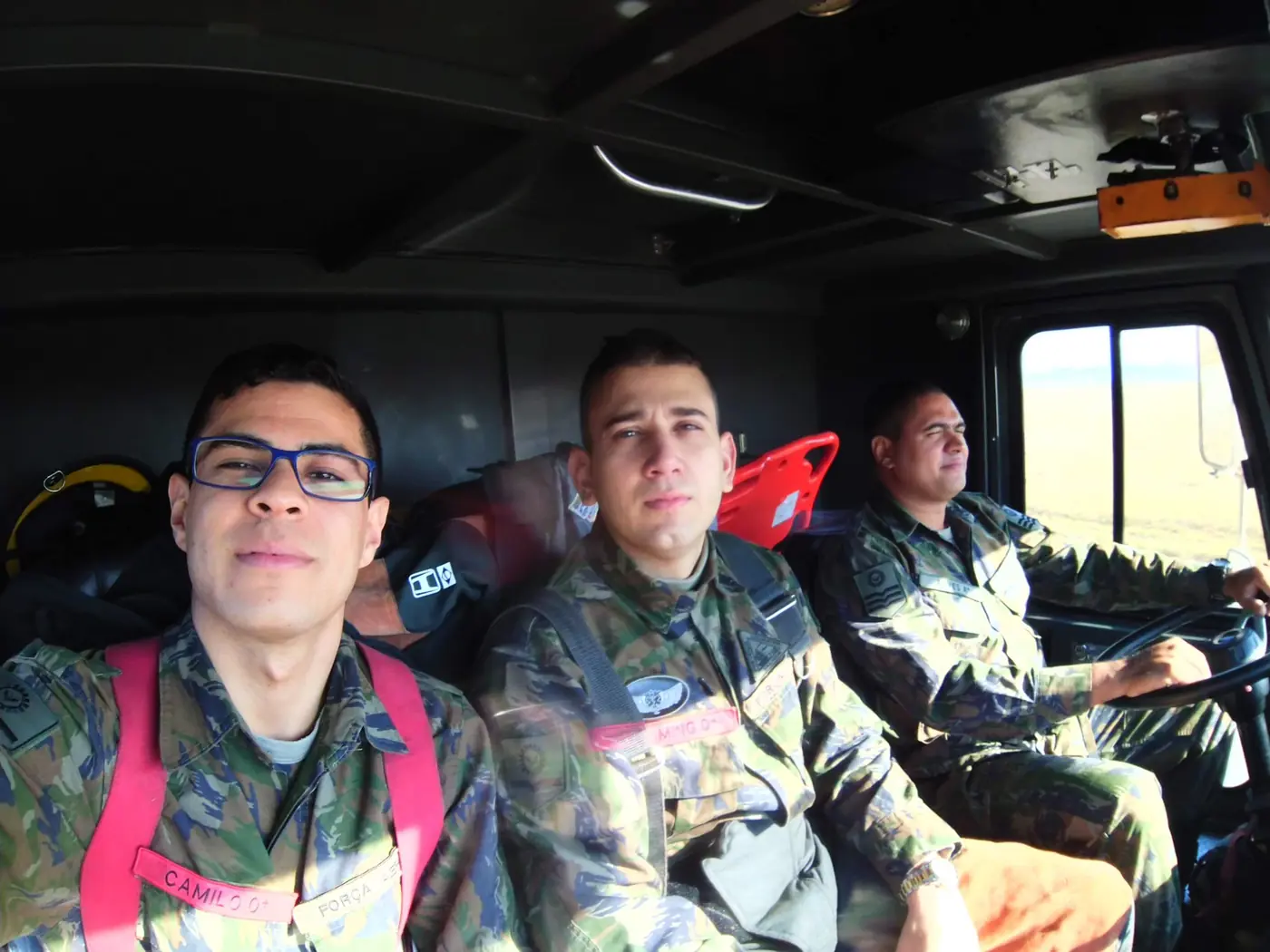
Wladimir Ming and two Air Force colleagues in uniform inside the cab of a fire truck
In the cab of a fire truck.
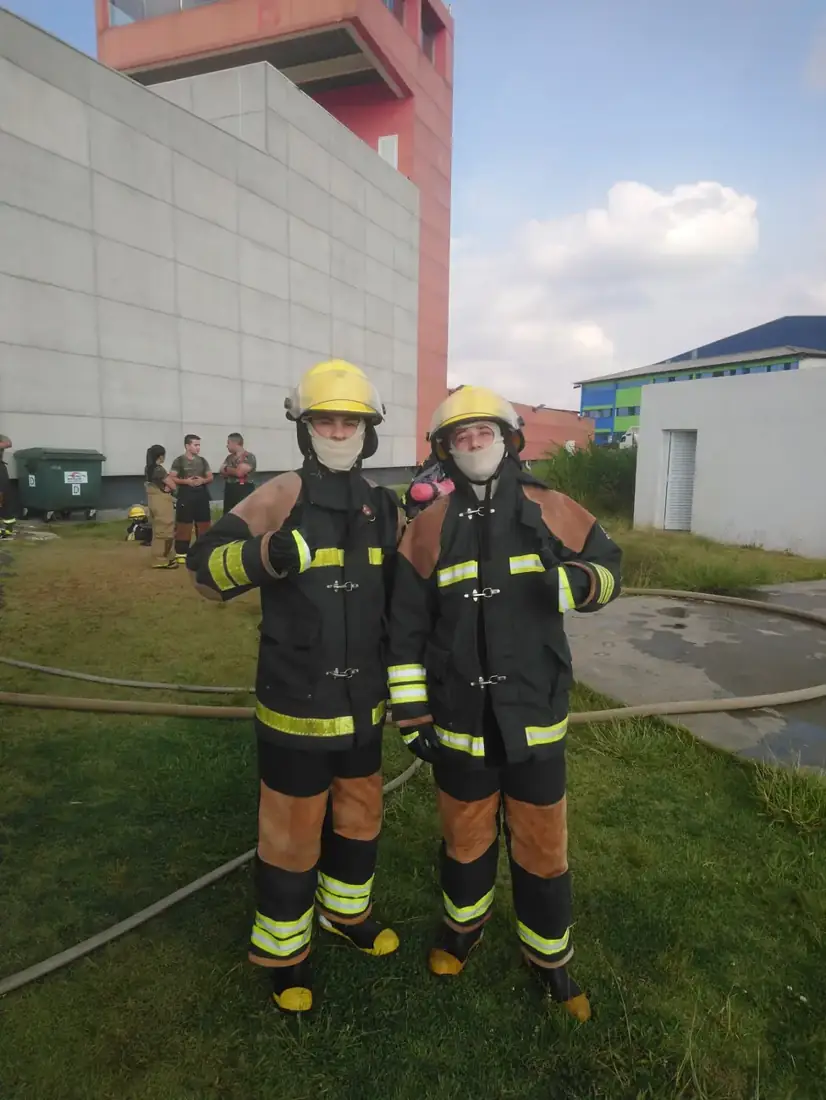
Two firefighters in full protective gear, helmets and hoods, giving a thumbs-up during training
Training in full protective gear.
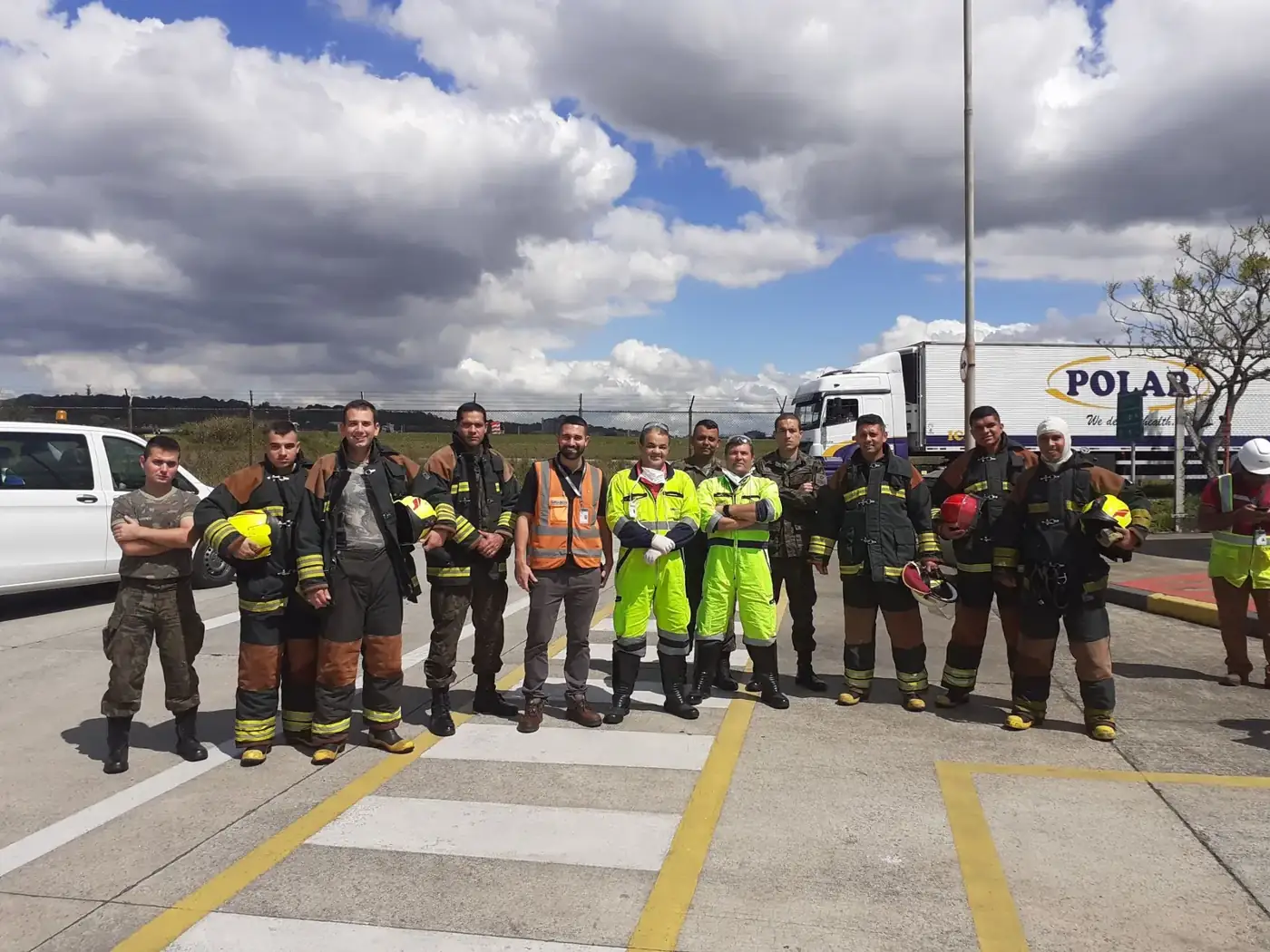
Air Force firefighters in protective gear standing with airport staff on the apron at Guarulhos
With airport staff at Guarulhos (2019).
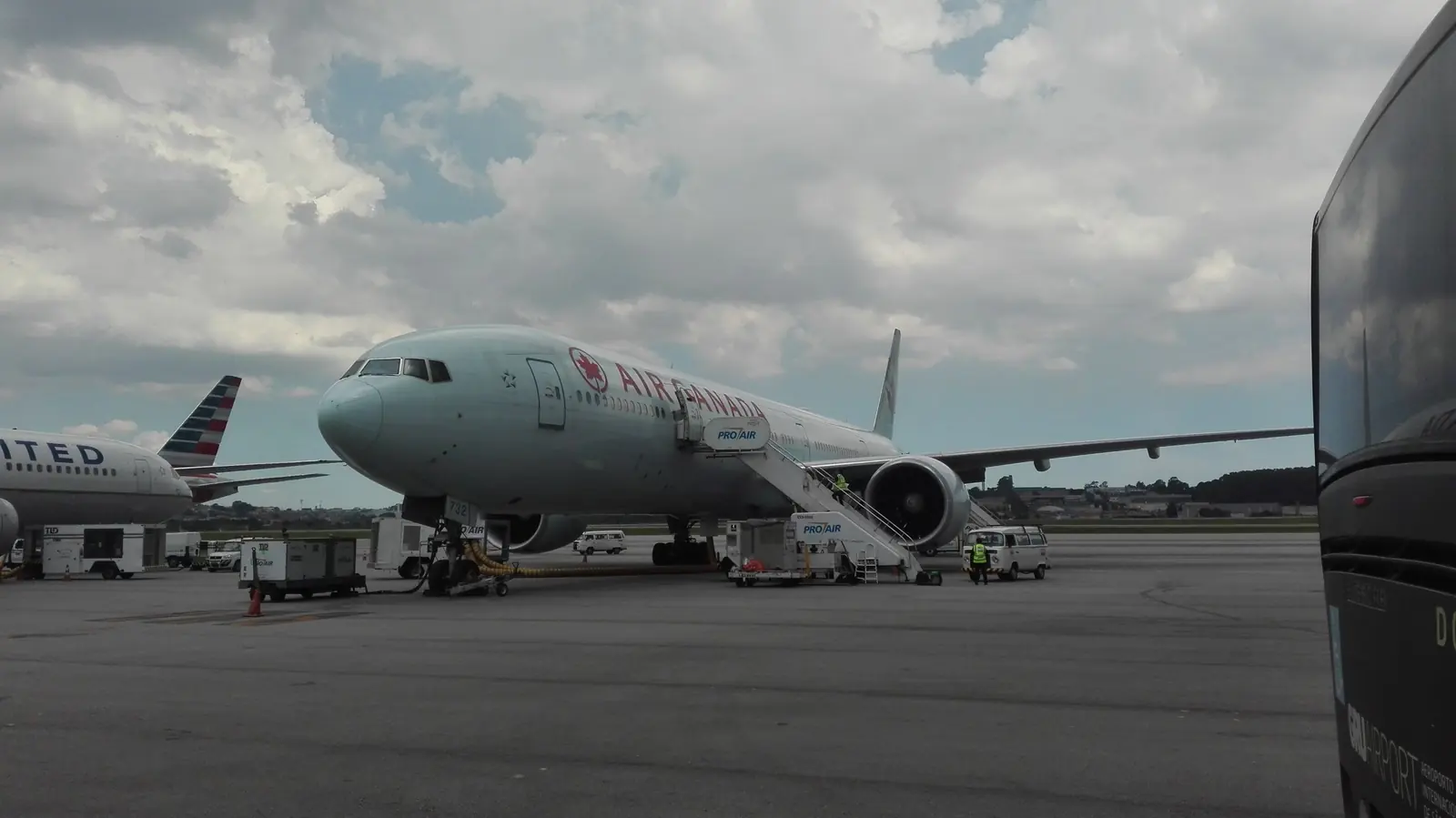
A wide-body airliner parked on the apron at Guarulhos International Airport, with ground equipment around it
The apron at Guarulhos International Airport (2018).
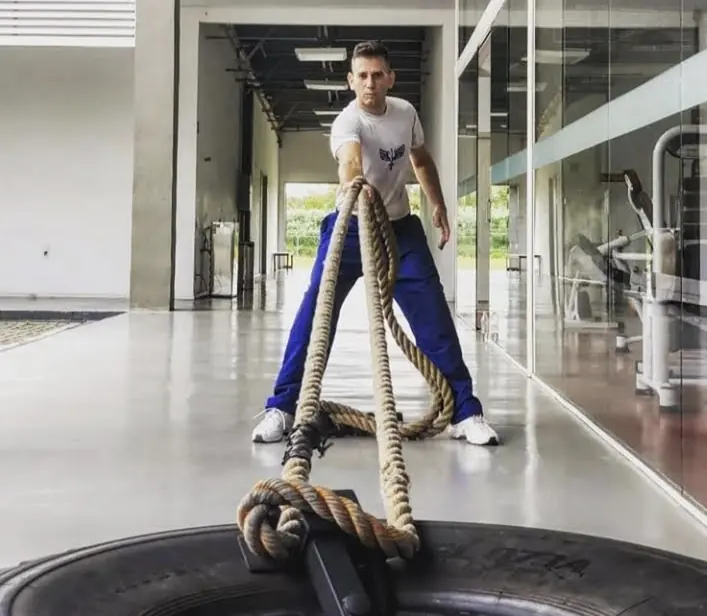
Wladimir Ming training with battle ropes tied to a tyre in a gym
Physical preparation.

After the Air Force: civil aviation

In 2020 I took that training into civil aviation, first as an aerodrome firefighter at Guarulhos International Airport, then as a rescue team leader at Congonhas.

  1. 2020 – 2022

    Aerodrome firefighter

    Guarulhos International Airport (GRU)

    Emergency response at one of Brazil's major airports, and wildlife hazard management: insect control and the capture of animals in collaboration with the environmental authority.

  2. ≈ 1 year

    Rescue team leader

    Congonhas Airport, São Paulo

    Led a team of three firefighters and was responsible for developing technical standards and procedures for training, inspection and maintenance of airport firefighting.

Leading a team and writing the rules

At Congonhas I led a team of three firefighters and wrote technical standards for training, inspection and maintenance. Writing a procedure is a discipline of its own: it has to be precise enough to be safe and simple enough to be followed under pressure.

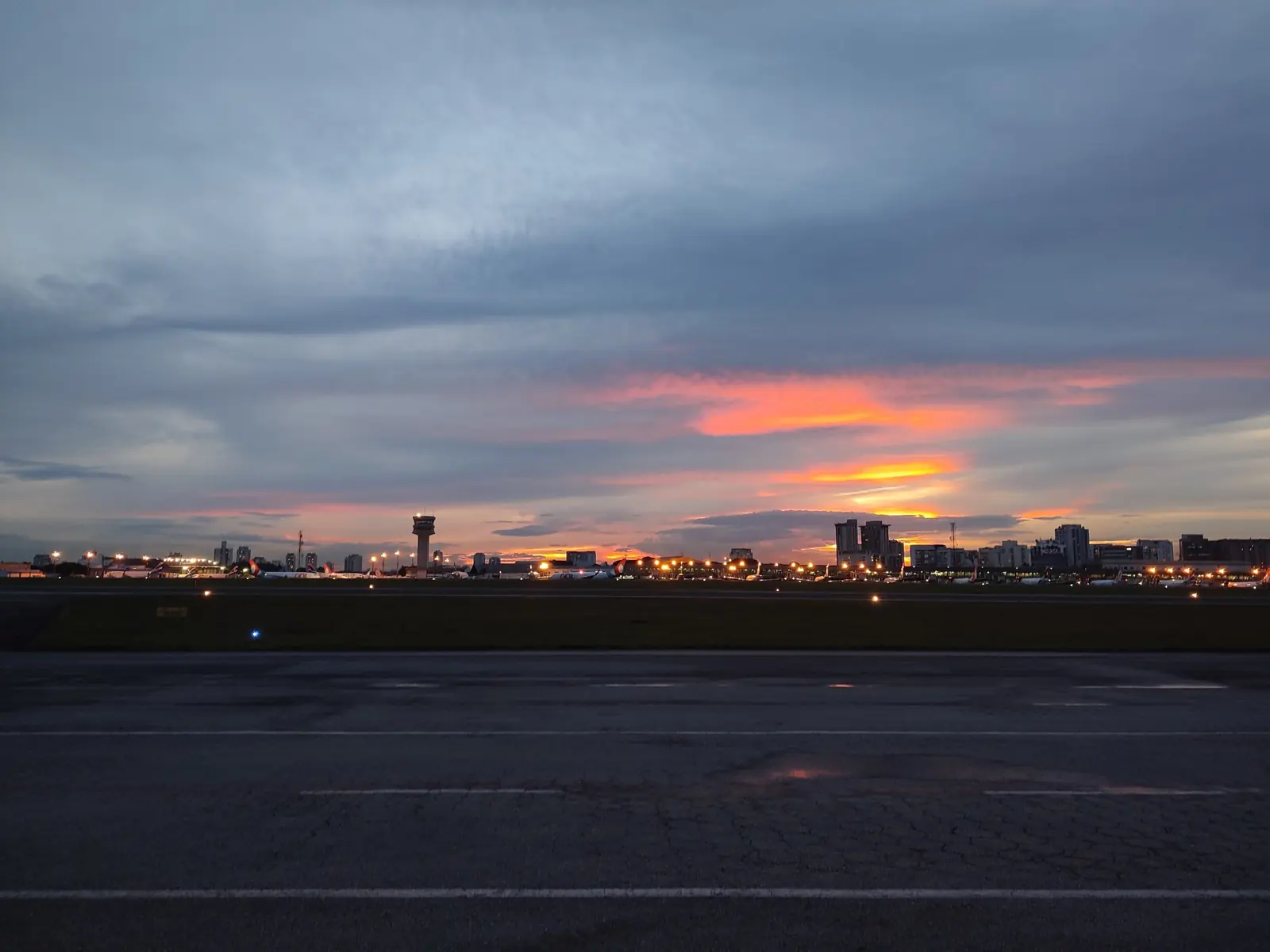
Dusk over the runway at Congonhas Airport, with the control tower and the São Paulo skyline lit on the horizon
Dusk at Congonhas (2023).
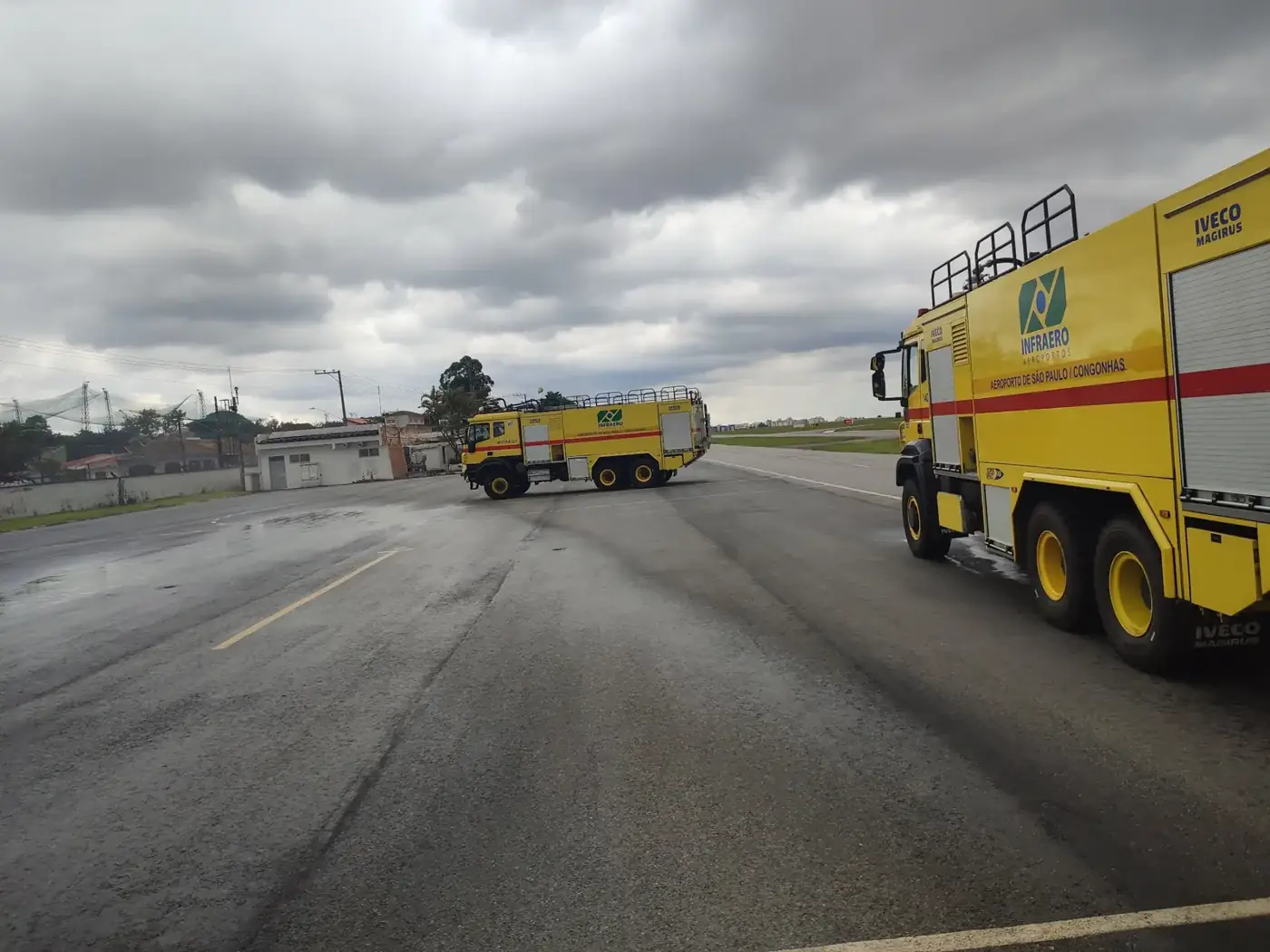
Two yellow Infraero crash tenders on a wet apron at São Paulo/Congonhas Airport under a cloudy sky
Crash tenders at Congonhas Airport (2023).
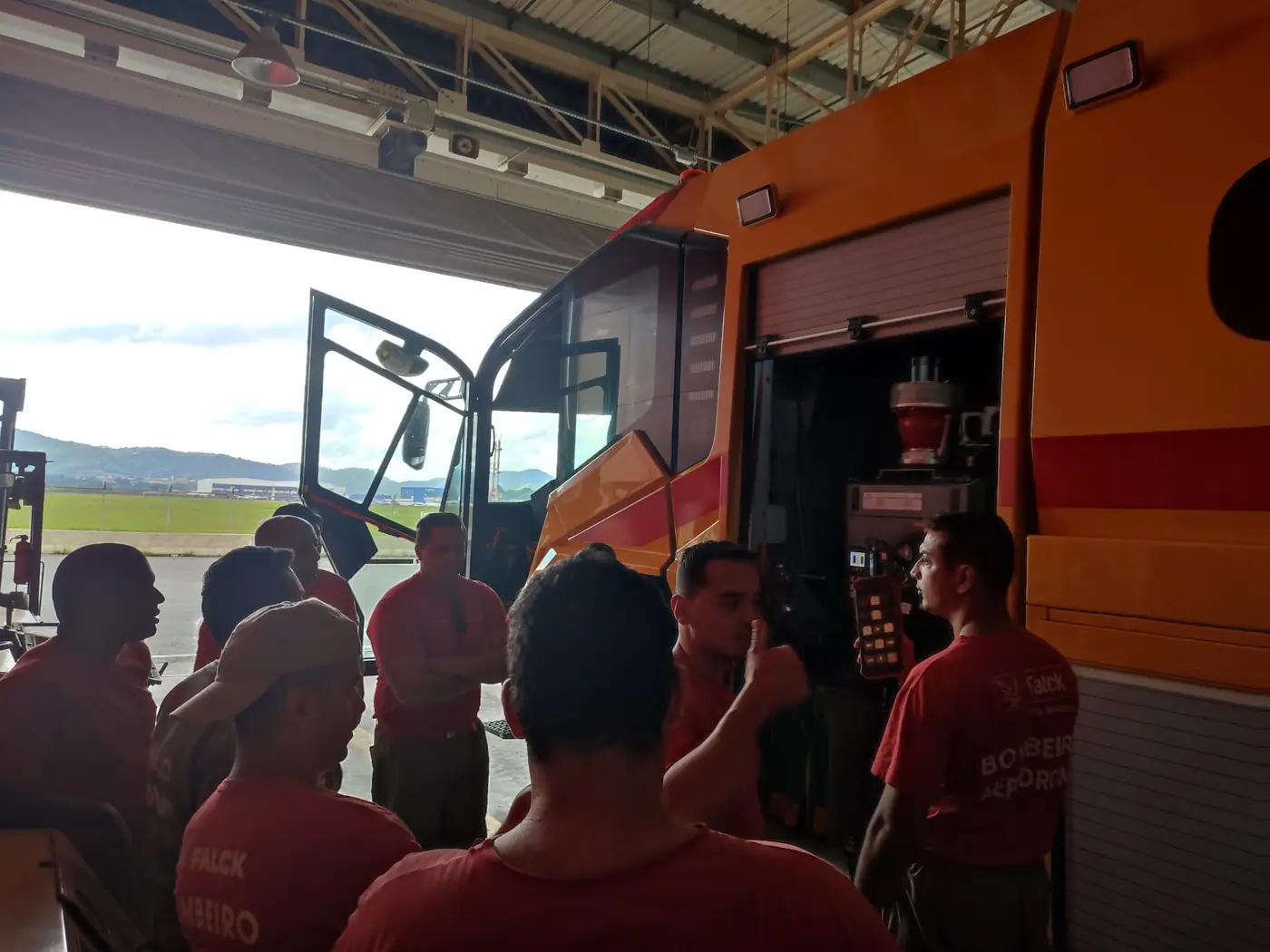
Aerodrome firefighters in red shirts gathered around a crash tender in a hangar while a colleague explains its controls
Briefing on a crash tender (2023).
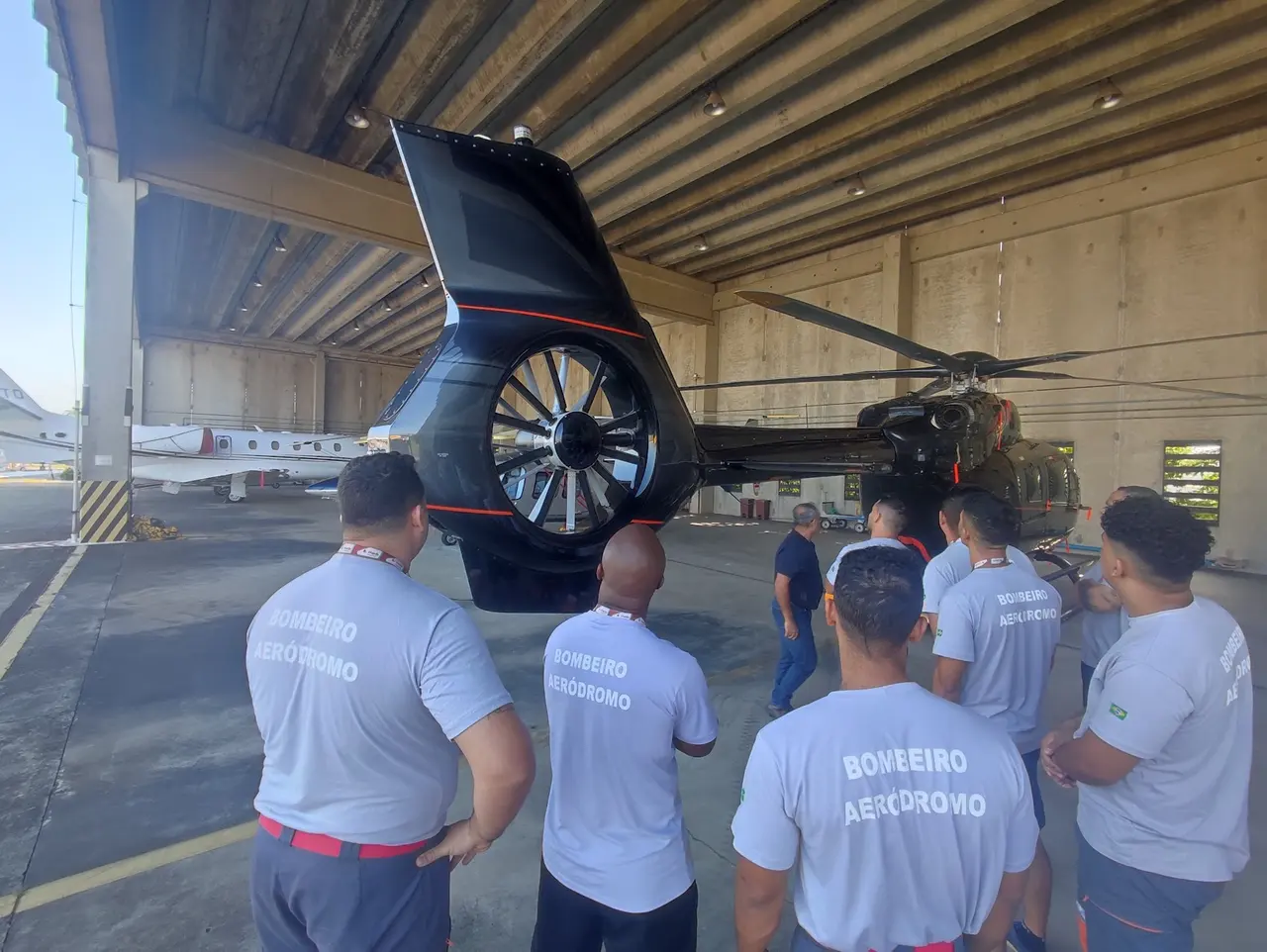
Aerodrome firefighters, seen from behind, studying a helicopter in a hangar
Aircraft familiarisation: knowing the machine before the emergency.
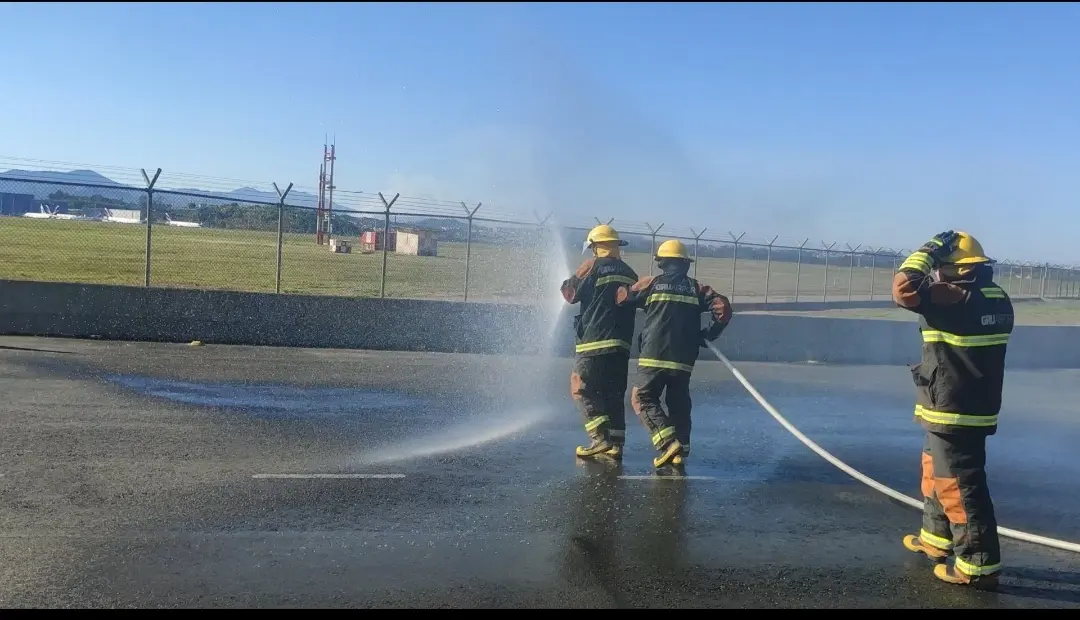
Three firefighters in yellow helmets training with a hose on the airside
Hose drills on the airside.
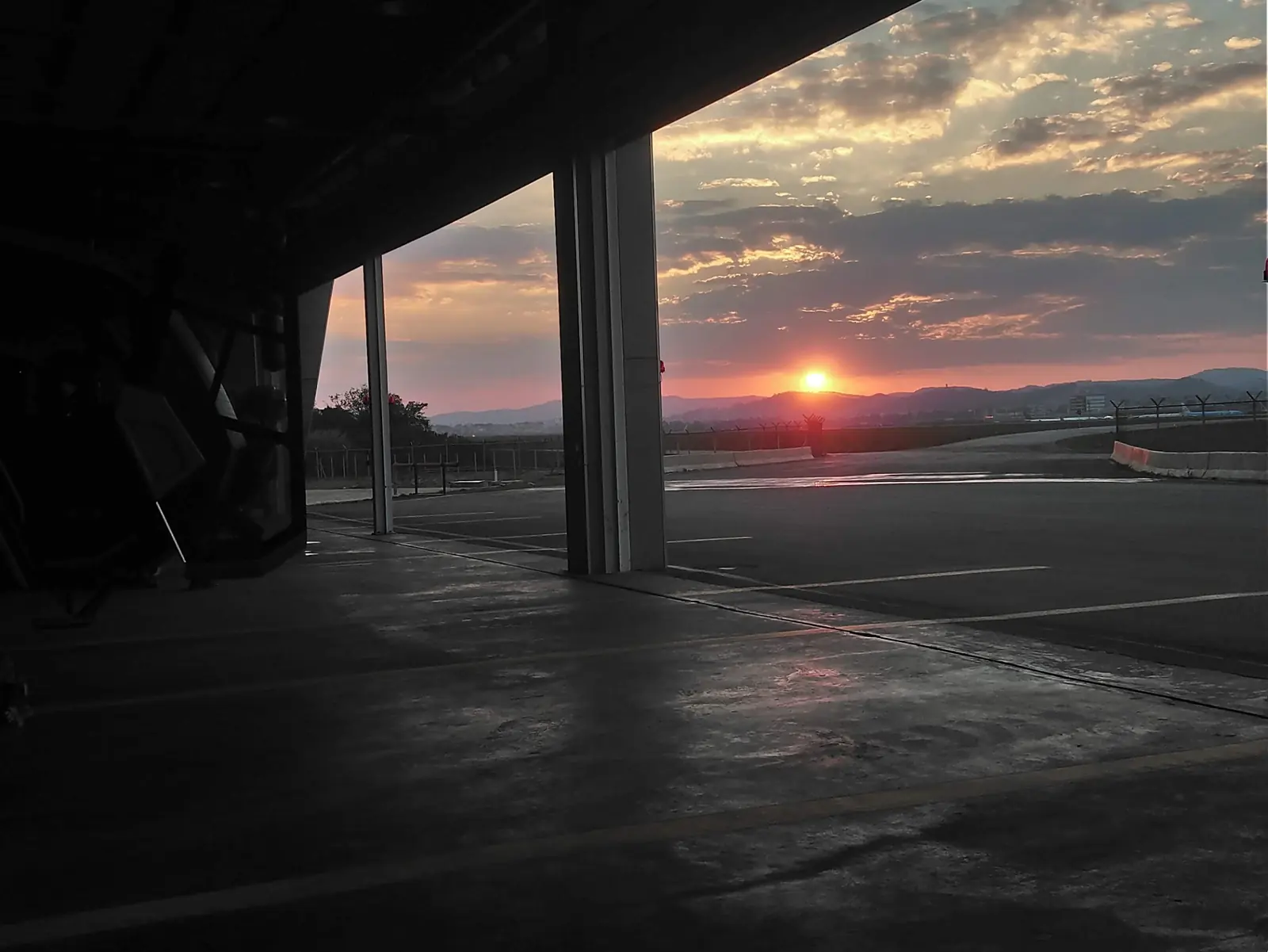
Sunset seen from inside an open hangar, with the apron and distant hills
Sunset from the hangar.
Open turbofan engine of a wide-body aircraft during an inspection
Inside a turbofan engine.
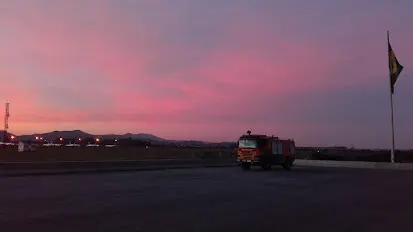
A fire truck on the apron under a pink dusk sky
End of a shift.